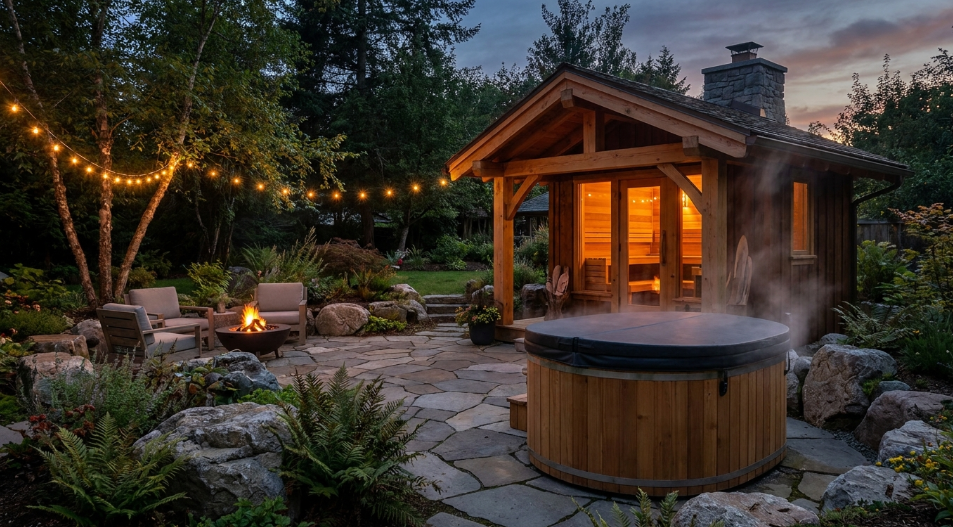
Choose electric heat if you want fast, consistent temperature control and no fuel storage, and choose wood heat if you value the ritual of tending a fire and want a heater that works without grid power. Both produce the same rock-and-steam experience once the room is hot; the difference is almost entirely in installation, maintenance, and daily use, not in the quality of heat itself.
Step 1: Check What Your Electrical Panel Can Support
Most residential sauna heaters between 6 and 9 kW need a dedicated 240V circuit, typically on a 30 to 50 amp breaker depending on the model. Before deciding anything else, have an electrician check whether your panel has capacity for a new large circuit. If the panel is already near capacity or the sauna sits far from the house, the cost of upgrading service or trenching a new run can tip the decision toward wood heat, which needs no electrical work beyond a small light fixture.
Step 2: Confirm Whether a Flue Will Clear Your Roofline
A wood-fired stove needs a straight, code-compliant flue run through the roof, with proper clearance to any combustible framing and a spark-arrestor cap on top. If your cabin sits under low branches, near a fence, or tight to a house eave, routing a flue safely can be difficult or require a taller-than-ideal stack. Electric heaters skip this problem entirely since they only need a vent for air exchange, not an exhaust flue.
Step 3: Think Through Your Actual Usage Pattern
Electric heaters reach bathing temperature in roughly 20 to 30 minutes with a simple on-off switch or timer, which suits people who want to use the sauna spontaneously after work or a workout. Wood-fired stoves generally take 45 minutes to an hour to build a full bed of coals and stabilize room temperature, and someone has to tend the fire during that window. If your household uses the sauna on a whim rather than as a planned weekend ritual, electric heat usually fits better.
Step 4: Weigh Fuel Cost and Storage Against Running Cost
A face cord of seasoned hardwood can heat a small sauna for a good number of sessions and needs a dry, ventilated storage spot near the cabin. Electric running cost is easier to pin down: a 7 kW heater running for about an hour, several times a week, adds a predictable line to a power bill that you can calculate directly from your local utility rate. Neither option is dramatically cheaper in every case; it depends on regional wood prices versus electricity rates, and how often the sauna gets used.
Step 5: Decide How Much Maintenance You Want
Wood stoves need the flue swept periodically, ash cleaned out after use, and rocks replaced every couple of seasons once they start to crack from repeated heat cycling. Electric heaters need far less upkeep, mainly rock replacement and an occasional check of the heating elements, since there is no combustion byproduct to manage. If low maintenance matters more than ritual, electric heat is the simpler long-term choice.
Step 6: Compare Models Side by Side Before Buying
Once you know your panel capacity, roofline constraints, and usage pattern, narrow the decision to two or three heater models in your target kW range rather than agonizing over every option on the market. Specialty sauna retailers list both electric and wood-fired stoves with clearance and volume ratings side by side, which makes the comparison faster; it is worth a few minutes to explore the range before settling on a final size, since heater sizing outside the recommended cubic-foot range is the most common installation mistake.
Step 7: Match the Heater to Who You Are as a Buyer
A renter or someone in a suburban neighborhood with a small lot and strict setback rules usually leans toward electric, since it avoids flue permitting and fits a smaller footprint without a chimney taking up roofline space. Someone building a permanent cabin on rural or off-grid property, where firewood is already part of the household’s routine and grid power may be less reliable, often leans wood-fired instead, both for resilience during outages and because the fire-tending ritual fits the pace of that kind of property. Neither choice is objectively better; the right one depends on the property, the electrical service already available, and how much hands-on maintenance a household actually wants to take on.
Step 8: Factor In Resale and Long-Term Property Value
Buyers who plan to sell the property eventually should think about which heat type is easier for a future owner to maintain. Electric heaters need almost no specialized knowledge to operate safely out of the box, which makes a sauna an easier selling point to a broader range of buyers. A wood-fired stove requires the next owner to understand flue maintenance, seasoning wood correctly, and basic fire safety, which some buyers find appealing as part of a rustic property and others see as one more system to learn. If broad resale appeal matters more than authenticity to the original Finnish tradition, electric is usually the safer long-term bet. That said, a well-built wood-fired cabin with a clean flue installation and a documented maintenance history can still be a genuine selling point in markets where buyers specifically seek out a rustic, off-grid-capable property, so the calculation is not one-directional in every market.
Frequently Asked Questions
Is a wood-fired sauna heater cheaper to run than electric?
Cordwood is often cheaper per session than electricity in areas with high power rates, but the comparison depends heavily on local wood and electricity prices. Electric heaters have a predictable per-session cost you can calculate from your utility rate and the heater’s kW rating.
Can I install an electric sauna heater myself?
Small plug-in electric heaters under about 3 kW can sometimes run on a standard outlet, but most residential sauna heaters need a dedicated 240V circuit, which should be installed by a licensed electrician and inspected to code.
Does a wood-fired sauna need a chimney permit?
Most jurisdictions require a permit for any new solid-fuel appliance with a flue through the roof, similar to a wood stove permit for a house. Check with the local building department before installing a wood-fired stove.
Which heat type is more traditional?
Wood-fired stoves are closer to the original Finnish sauna experience and produce a softer, more humid heat when water is thrown on the rocks. Electric heaters are a modern convenience that most closely replicates that same rock-and-steam experience without fuel handling.
References
- Clinical Effects of Regular Dry Sauna Bathing: A Systematic Review, Evidence-Based Complementary and Alternative Medicine, 2018.
- Benefits and risks of sauna bathing, The American Journal of Medicine, 2001.
- Does the Combination of Finnish Sauna Bathing and Other Lifestyle Factors Confer Additional Health Benefits? A Review of the Evidence, Mayo Clinic Proceedings, 2023.
